

 Demo
DemoAgent Spotlight - Oil & Gas Regulatory Compliance
Regulatory compliance in oil and gas operations hinges on timely payments, accurate filings, and clean inspection histories at both the well and lease level. Missed obligations—whether financial, operational, or administrative—can quickly escalate into severe actions, penalties, or even suspension of operations.
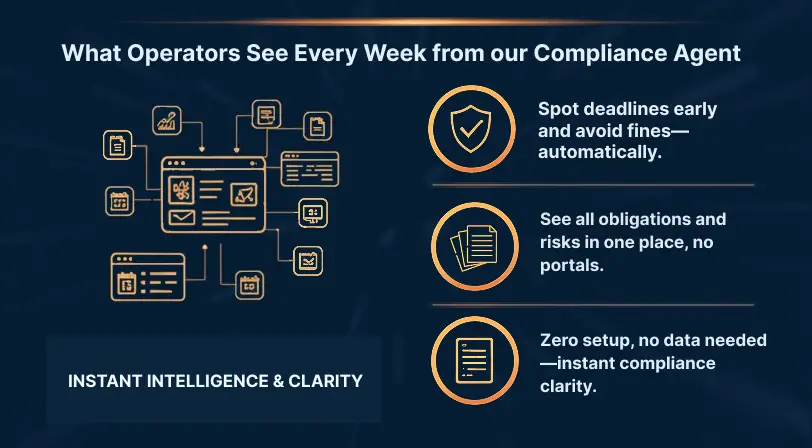
A unified compliance view consolidates these signals, helping operators reduce risk, prioritize action, and improve decision-making.
Inspection Compliance
Inspection compliance tracks violations recorded during regulatory inspections—including environmental, safety, mechanical, or operational issues. Each violation is mapped to the appropriate lease and well (via API numbers) and includes:
- A concise issue description
- Inspection date and violation severity
- Required remediation and current status
Severance Compliance
Severance compliance focuses on identifying leases and operators with unpaid fees, penalties, or enforcement actions, while also documenting the precise reasons behind those triggers.
Common causes include:
- Non-payment of assessed severance fees
- Failure to file required production or organizational reports (PR, P-5, ST-1)
- Unresolved inspection violations tied to specific wells
Repeated or unresolved issues increase regulatory scrutiny and frequently lead to penalties or enforcement actions.
These automated processes replace time-consuming manual retrieval, saving your team hours of work and reducing the risk of missing critical deadlines. Each compliance report is summarized and correlated for strategic decision-making.
Introducing the MangoBytes AI Explorer — Your AI Advantage Starts Now
Never Pay Fines Again.
$2/day. Less than your daily coffee.
Ends on February 20, 2026 at 11:59 PST
Get your compliance report and more just for $2/day
Industry Insight: Agentic AI Is Redefining the Tech-Services Landscape
Agentic AI is rapidly transforming enterprises, with more than 80% of C-suite leaders already running pilots or actively expanding into production. The momentum is undeniable: a noticeable increase in IT spending, as organizations look to capture the value that early-generation AI initiatives often failed to deliver.
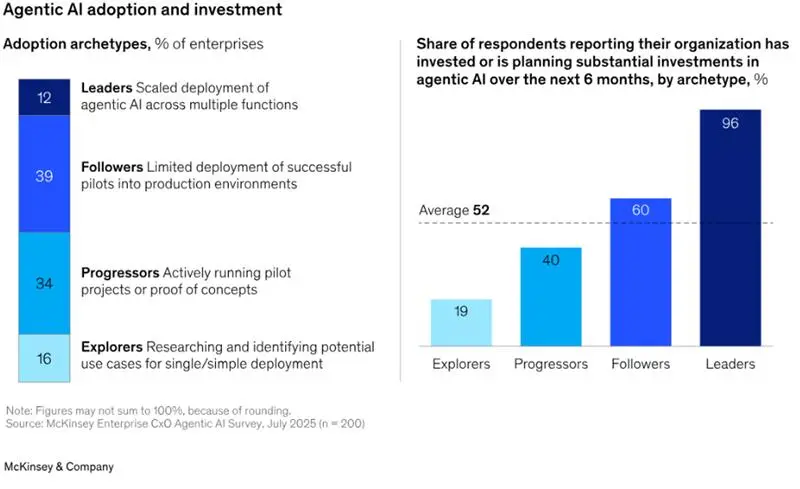
However, this shift also brings disruption. As companies adopt human-agent operating models and automate entire workflows, legacy work, legacy services, and traditional outsourcing models may experience a 20-30% contraction. Many enterprises are internalizing AI-driven technology management, reducing reliance on legacy service structures.
Yet the opportunity ahead is significant. McKinsey estimates that agentic AI could unlock $100–$400 billion in additional value for tech-services players by 2030—equivalent to roughly 3 additional basis points to annual sector GDP.
At the same time, competitive boundaries are blurring as hyperscalers, software vendors, and emerging AI-native disruptors all converge, raising the bar for innovation and accelerating the pace of change across the industry.